
How to Get Cited in Google’s AI Overviews: A Step‑by‑Step Playbook
Adam Friesen
November 24, 2025
Key Takeaways
1. Answer-first pages win more citations. Start each target page with a 1–2 sentence direct answer, followed by 3–6 bullets or steps so AI Overviews can lift a clean, self-contained snippet.
2. Make entities and E-E-A-T unmissable. Use clear author blocks, “about the author” sections, and consistent brand naming, backed by verifiable profiles (like LinkedIn) and third-party mentions to strengthen trust signals.
3. Multimodal content expands your citation surface area. YouTube videos with transcripts and chapters, podcasts with transcripts, interactive tools, datasets, and well-described images give AI Overviews more ways to find and attribute your expertise.
4. Track AI-specific KPIs, not just rankings. Monitor citation count, AI visibility share, CTR from cited pages, and structured data health to see which optimizations actually improve citation performance.

How to Optimize Content for Google AI Overviews and SGE Citations?
Optimizing for AI Overviews requires an answer-first editorial approach, well-structured content, and explicit entity markup so that generative models can easily extract and verify facts. Start each target page with a direct, concise answer to the primary question, followed by structured supporting bullets or numbered steps, and prominently surface the author and organizational entities. On the technical side, clean HTML headings, valid JSON-LD, accurate dates, and canonicalization complement good writing. Below are practical checklists and a schema comparison table that make implementation repeatable and audit-friendly.
What Are the Best Practices for Semantic Content Structuring and Answer-First Writing?
Answer-first writing places the clearest possible response at the top of the page so generative models and snippet algorithms can extract the core fact immediately. Structure these lead sections as a one- or two-sentence direct answer followed by 3–6 bullets or a short numbered list to provide attributable facts and clear context. Use subheadings that reflect likely queries (hint: find these in the “people also ask” section of Google), and maintain concise paragraphs with lists and tables to increase extractability. Semantic interlinking to related cluster pages reinforces topical authority and signals depth to AI systems, which supports citation likelihood.
- Start with a 1–2 sentence direct answer that resolves the user’s primary intent.
- Follow with 3–6 bulleted or numbered supporting facts or steps for quick extraction.
- Use tables or graphs, consistent naming, and cross-linking to topical hubs.
These tactics create content that is both user-friendly and optimized for AI selection, and they naturally lead to schema implementation for explicit entity disclosures.
How Can You Integrate Primary Entities Like E-E-A-T and Brand Mentions Effectively?
Only show authors and organizations that can be verified, such as author bylines, “About the author” sections, and consistent organization names in site metadata. Back these on-site signals with off-site verifications: professional profiles, published work, and reputable citations that mention the brand or author. Integrate structured data for Person and Organization to encode these relationships, enabling AI systems to match on-site content to external profiles.
- Ensure every feature article includes an author block with credentials and publication history.
- Link author bios to public professional profiles and list verifiable accomplishments.
- Use consistent organization naming and logos in structured data to avoid entity fragmentation.
Strengthening these entity signals closes the gap between content quality and the verifiability generative systems require.
How to Use Structured Data and Schema Markup to Enhance AI Understanding?
Structured data makes entity relationships explicit so AI models can parse authorship, publishing date, and content type quickly, increasing extractability for Overviews. Implement JSON-LD for Article, FAQPage, HowTo, Person, and Organization where applicable, populating key properties: headline, author.name, datePublished, dateModified, mainEntity, and sameAs links for verification. Validate all markup with structured data testing tools and monitor Structured Data errors in the search console equivalent to ensure clean ingestion. Properly used, schema supplements natural language with machine-readable facts that generative engines rely on when choosing citations.
Here is a comparison table of essential schema types and their best use cases to guide implementation.
|
Schema Type |
Best Use Case |
When to Implement |
|---|---|---|
|
Article |
Long-form explainers and news-style pieces |
Use on pillar content with clear author and dates |
|
FAQPage |
Direct question-and-answer pages |
Use for query-focused pages and Q&A sections |
|
HowTo |
Procedural content with steps |
Use for tutorials and actionable guides |
|
Person |
Author credentials and identity |
Use on author pages and bios for E-E-A-T |
|
Organization |
Brand entity and logos |
Use site-wide to declare official organization info |
Summary: Choosing the correct schema type and populating authoritative properties creates machine-readable signals that improve entity matching and the chance your page is cited in AI Overviews.
Which Schema Types Are Essential for AI Overview Optimization?
Prioritize Article, FAQPage, HowTo, Person, and Organization schemas because they declare the content’s purpose and the responsible entities in a way AI understands. Use Article for long explainers, FAQPage for question-answer pairs that feed snippet extraction, and HowTo for stepwise instructions that generative models can quote. Person and Organization markups provide the verification layer for E-E-A-T by linking authors and brands to canonical identifiers. Include datePublished and dateModified to signal freshness, and enrich media with MediaObject markup for clearer multimodal association. Implement these schemas selectively and validate them regularly.
- Use Article schema for cornerstone content with author and dates.
- Add FAQPage sections where user questions are explicitly answered.
- Apply HowTo markup to procedural content to enable step-by-step extraction.
How to Leverage Different Styles of Content for AI Overview Citations?
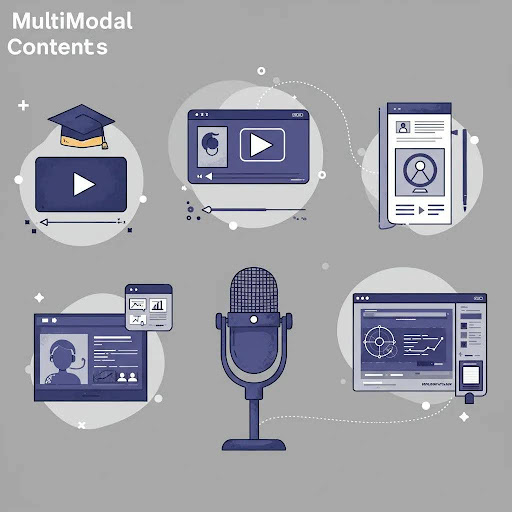
Multimodal assets like video, audio, and images provide additional evidence sources for AI Overviews because they contain transcriptable and indexable signals that extend extractability beyond text. Video transcripts, chapters, and descriptive metadata are especially useful because many Overviews cite YouTube as a primary source for demonstrations and tutorials. Images and datasets with descriptive ALT text and structured descriptions also support citation selection. The subsections below give practical optimization checklists and a comparison table for multimodal formats.
Why Is YouTube Video Content Critical for AI Citations?
YouTube frequently appears as a cited format for how-to and demonstration queries because videos provide verifiable timestamps, chapters, and transcribable content that generative models can reference directly. To optimize, make sure you include full transcripts, chapter markers, and descriptive titles and descriptions. Embedding videos on your primary article and ensuring the same canonical title and metadata on the page and on the video platform reduces entity fragmentation. These steps make your video more discoverable to AI Overviews and increase the chance a specific timestamp or quote is used as a citation.
How Can LinkedIn Boost E-E-A-T Signals?
LinkedIn acts as a verification point that confirms author credentials and organizational roles, which AI engines then use to assess trustworthiness before citing a source. Be sure to fill out your profile with complete position histories, publications, and links to articles to stay consistent across platforms. Encourage authors to list relevant publications and include links back to their content so AI systems can correlate credentials to cited pages. Recency matters too, regular updates to profiles and public posts strengthen the freshness and relevance signals that influence citation selection.
- Complete all profile fields and list publications with dates.
- Link profile entries back to canonical articles and author pages.
- Publish periodic posts or updates referencing new content to maintain recency.
These practices increase the probability that an author entity will be recognized and trusted by AI systems during citation selection.
What Other Multimodal Formats Can Improve AI Overview Visibility?
Besides video and professional profiles, podcasts with full transcripts and high-quality images with descriptive ALT text contribute to improving visibility. Each format requires different metadata: the audioObject schema for podcasts and descriptive EXIF/ALT metadata for images. Having machine-readable transcripts, not only helps real people understand your content better, but also make content more usable for models. Prioritize formats aligned with user intent; for example, datasets work well for research queries while interactive calculators are ideal for comparison and decision queries.
Introductory checklist for multimodal formats:
- Always attach machine-readable transcripts or descriptive metadata.
- Use appropriate schema types for each asset to declare format and purpose.
- Ensure consistent naming and entity references across modalities to avoid fragmentation.
The table below outlines format-specific signals and optimization tasks to help prioritize multimodal investments.
|
Format |
Signal Type |
Optimization Checklist |
|---|---|---|
|
YouTube Video |
Transcript, chapters, metadata |
Add full transcript, chapters, videoObject JSON-LD |
|
Podcast |
Audio transcript, show notes |
Publish episode transcripts and audioObject schema |
|
Interactive Tool |
Structured inputs/outputs |
Provide descriptive metadata and data schema |
|
Dataset |
Metadata, README, schema |
Publish dataset schema and descriptive fields |
Summary: Prioritizing formats that match user intent and ensuring each asset has machine-readable metadata increases the overall probability of being cited across a wider set of queries.
How to Track, Measure, and Improve Your AI Overview Citation Performance?
Measurement for AI citations requires combining traditional SEO metrics with new signals such as citation count in Overviews, visibility share inside said results, and CTR. Now, it’s possible to track these in modern digital marketing platforms. If you are using Pocket Agency, you can tag AI-Overview-target pages, see what people are searching for most, and how they frame it, and monitor their rankings. Use a KPI framework that aligns citation outcomes with business goals and adopt tooling workflows that surface structured data errors and entity inconsistencies.
What Key Performance Indicators Indicate AI Citation Success?
Key KPIs include citation count (how often your domain or page is cited in Overviews), AI visibility share (percentage of queries in a tracked set where your content appears in Overviews), CTR from cited Overviews, and structured data health (number and severity of markup errors). Each KPI has a diagnostic role: citation count measures direct selection, AI visibility share shows topical presence, CTR links selection to traffic, and structured data health indicates technical barriers to selection. Benchmarks vary by industry, but the relative trends show that growth in citation count and stable or increasing CTR are signals of successful optimization.
- Citation Count: Number of AI Overview citations attributed to your pages.
- AI Visibility Share: Percentage of tracked queries showing your content in Overviews.
- Structured Data Health: Errors/warnings in JSON-LD and schema implementations.
Tracking these KPIs allows teams to prioritize remediation and content updates where they will move the needle most effectively.
Which Tools Help Monitor AI Overview Visibility and Structured Data Health?
A combination of search console data, SEO platforms like Pocket Agency, and custom monitoring routines works best for AI citation tracking because no single tool currently reports all generative-engine citations perfectly. Use search console for performance data and impressions, as well as baseline visibility. Use SEO platforms for query tracking, measuring share of voice, and monitoring sentiment. Additionally, try to capture citations that may not be surfaced automatically and log them for trend analysis. This layered toolset ensures you can detect both technical issues and content-level opportunities.
- Use search console and query tracking to monitor impression and CTR shifts.
- Schedule structured data crawls and fix JSON-LD errors promptly.
- Maintain manual checks and sample extractions to verify citation attribution.
The following table maps metrics to how they are measured and suggested monitoring tools to operationalize tracking.
|
Metric |
How It’s Measured |
Tool & Target Threshold |
|---|---|---|
|
Citation Count |
Manual extraction + tracked queries |
Use query tracking platforms; aim for month-over-month growth |
|
AI Visibility Share |
Percent of tracked queries with citations |
SEO platform sampling; target incremental increases |
|
CTR from Overviews |
Click-through counts on cited pages |
Search performance data; maintain or improve CTR |
|
Structured Data Health |
Error/warning counts |
Structured data tests; zero critical errors |
Summary: Mapping KPIs to tools and thresholds creates an operational measurement framework that teams can use to prioritize fixes and prove ROI from AI Overview optimization efforts.
What Are Advanced and Future-Proof Strategies for Sustained AI Overview Citations?
Sustained citation success requires being adaptive by doing continuous industry-specific analysis and content refresh cycles aligned to freshness signals and model updates. Advanced teams use entity-first content architecture, experiment with multimodal evidence, and maintain a research backlog of emerging GEO (Generative Engine Optimization) tactics. Planning for resilience also means decentralizing entity verification across multiple authoritative sources so a single platform change does not remove all evidence of expertise.
How to Adapt to Industry-Specific AI Overview Trends and Content Gaps?
Analyze industry citation trends by sampling queries, identifying which formats and sources are most commonly cited, and mapping content gaps where Overviews lack high-quality evidence. Prioritize creating targeted assets, case studies, datasets, or interactive tools that fill those gaps and that are naturally citable. Use a gap-mapping workflow: collect Overviews for top industry queries, annotate missing evidence types, and assign content projects to fill the highest-impact gaps. This targeted approach increases the likelihood your content will be selected in vertical-specific Overviews.
- Sample Overviews in your industry to spot common source types and missing assets.
- Map content gaps to asset types (e.g., dataset, tutorial, case study).
- Prioritize content creation by potential citation impact and feasibility.
This methodical approach makes industry-tailored citation gains repeatable and measurable.
What Emerging SEO Practices Support Generative Engine Optimization?
Emerging practices include entity-first content modeling, systematic multimodal metadata production, and testing frameworks to measure the effect of schema and freshness on citation rates. Maintain an experiments log with clear hypotheses, measurement windows, and KPI expectations so teams can differentiate noise from signal as generative engines evolve. Staying experimental and data-driven is the most reliable future-proof tactic.
- Implement controlled pilots for schema and multimodal changes.
- Measure impacts with a defined KPI set and sufficient time horizon.
- Iterate based on evidence and scale successful experiments.
These practices institutionalize learning and keep your citation strategy aligned with ongoing algorithmic shifts.